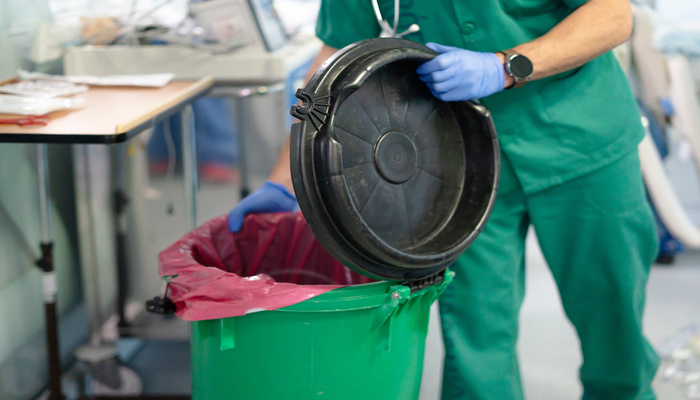
Healthcare facilities are responsible for proper waste disposal to protect staff, patients, and the environment from hazardous materials. However, many clinics and hospitals struggle with compliance, resulting in hefty fines, legal issues, and serious safety risks. Recognizing common pitfalls can help facilities maintain a safe and compliant environment.
Here are five common medical waste management mistakes that healthcare providers often overlook.
Mixing Hazardous and Non-Hazardous Waste
One of the most frequent errors in medical facilities is improper waste segregation. Staff often mistakenly throw general waste, like pizza boxes or paper cups, into red biohazard bags. This misclassification raises disposal costs because regulated medical waste (RMW) must undergo costly treatment processes such as autoclaving or incineration.
Conversely, placing red bag waste into standard trash bins threatens janitorial staff and municipal waste handlers. Adequate segregation requires clear strategies:
- Color-Coding: Use distinct red bags for biohazard waste and clear or black bags for regular trash.
- Signage: Post visual guides above every bin to direct employees.
- Access: Place general trash cans next to medical waste bins to discourage improper disposal.
Neglecting Staff Education Protocols
OSHA regulations mandate comprehensive training for any employee who handles medical waste. Without consistent training, team members must rely on guesswork to handle hazardous materials. This lack of knowledge increases the likelihood of needlestick injuries and exposure incidents.
Training programs must cover:
- Bloodborne Pathogens (BBP) standards.
- Proper use of Personal Protective Equipment (PPE).
- Emergency spill response procedures.
Regular workshops reinforce safety standards and keep the team up to date on evolving regulations. An educated workforce reduces liability and maintains a safer workplace.
Storing Containers Beyond Time Limits
Allowing medical waste to accumulate creates breeding grounds for bacteria and foul odors. Both federal and state regulations mandate specific storage timeframes; exceeding these limits violates the law and attracts pests.
Temperature control is also critical. Pathological waste must be refrigerated to slow decomposition. To maintain hygiene and compliance, facilities should establish a routine collection schedule. Frequent pickups prevent overflow and ensure the facility stays within legal storage windows.
Failing to Track Waste Manifests
As the waste generator, you are responsible for waste from “cradle to grave.” This responsibility doesn’t end when the disposal truck leaves your facility. Losing shipping papers or failing to receive a certificate of destruction creates liability gaps.
Keeping detailed records is essential for proving compliance during inspections. Digital tracking systems provide better organization than paper files and demonstrate that the facility has followed all regulations throughout the disposal process.
Overlooking Small Chemical Containers
Many facilities ignore expired chemicals hiding in cupboards or maintenance closets. Staff might assume that small quantities pose no threat. However, old solvents, reagents, and cleaners deteriorate over time. These small vials pose significant dangers if they leak or react with incompatible substances.
The risks of not utilizing lab pack services include chemical burns, toxic fumes, and fire hazards. Professional lab packing involves consolidating these smaller containers into larger drums for safe transport and disposal. This process ensures hazardous chemicals are correctly handled rather than ending up in a dumpster or a drain.
Prioritizing Safety and Compliance
Strict adherence to disposal guidelines protects public health and the facility’s reputation. Reviewing current protocols identifies gaps before inspectors arrive. Correcting these common medical waste management mistakes saves money and safeguards lives. Continuous vigilance in waste management practices fosters a culture of safety that benefits everyone who enters the facility.